
Oral Surgery
Coronectomy in Guildford
At Woodbridge Hill Dental Practice, we provide carefully planned Coronectomy in Guildford for patients whose wisdom teeth may be too close to important nerves for full removal.
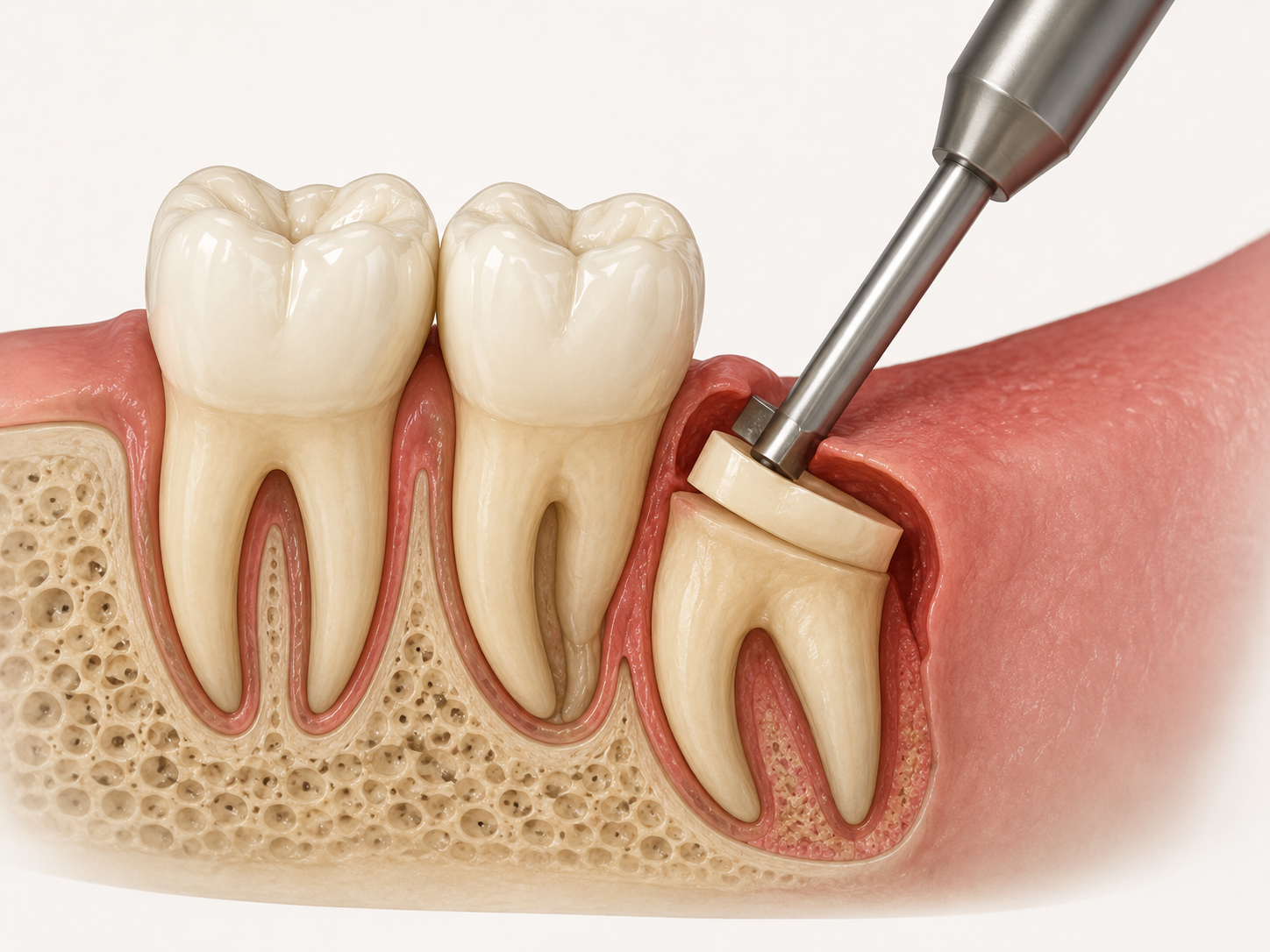
A coronectomy is a specialist oral surgery procedure where the crown of the wisdom tooth is removed while the roots are left in place to reduce the risk of nerve injury.
Careful Assessment
Planned using clinical examination and X-rays.
Wisdom Tooth Focus
Designed for selected lower wisdom teeth.
Patient Comfort
Clear guidance before and after treatment.
Wisdom Tooth Coronectomy at Woodbridge Hill Dental Practice
Wisdom teeth can cause pain, swelling, infection, food trapping, and discomfort when they do not have enough space to come through properly. In many cases, a wisdom tooth extraction may be suitable. However, when the roots sit very close to the inferior dental nerve, your dentist may recommend a coronectomy as a safer alternative.
Our experienced dental team will assess your case carefully, explain your options clearly, and create a treatment plan based on your symptoms, X-rays, and oral health needs.
What Is a Wisdom Tooth Coronectomy?
A wisdom tooth coronectomy is a minor oral surgery procedure used when removing the full wisdom tooth could carry a higher risk of nerve damage. Instead of removing the entire tooth, the dentist removes only the visible crown section of the tooth.
The roots are left undisturbed inside the jawbone. This helps reduce the chance of disturbing the nerve that may be very close to the wisdom tooth roots.
- The wisdom tooth is impacted
- The roots are close to a major nerve
- Full extraction may increase nerve risk
- The tooth is causing repeated infection
- The crown of the tooth is partly erupted
- Food trapping is causing discomfort
- The tooth is difficult to clean properly
When Is Coronectomy in Guildford Recommended?
Coronectomy in Guildford may be recommended when a wisdom tooth is causing symptoms, but full extraction could place nearby nerves at risk.
The lower wisdom teeth sit close to the inferior dental nerve. This nerve helps provide sensation to the lower lip, chin, and teeth. If a wisdom tooth root is very close to this nerve, removing the entire tooth may increase the chance of temporary or, rarely, longer-term numbness or altered sensation.
Your dentist may suggest coronectomy after reviewing your symptoms, clinical examination findings, dental X-rays, wisdom tooth position, root shape and depth, nerve proximity, and infection history. The aim is to treat the problem while reducing unnecessary risk.
Why Wisdom Teeth Sometimes Need Surgical Care
Wisdom teeth often come through in the late teens or early adulthood. For some patients, they erupt normally and cause no issues. For others, there is not enough space at the back of the mouth.
This can lead to impacted wisdom teeth, where the tooth becomes trapped under the gum or grows at an angle.
If symptoms keep returning, your dentist may recommend treatment. In suitable cases, Coronectomy in Guildford can be considered as part of your oral surgery options.
- Gum swelling
- Jaw pain
- Repeated infections
- Bad taste or bad breath
- Difficulty opening the mouth
- Pain when chewing
- Pressure against nearby teeth
Book a Coronectomy in Guildford Consultation
If you have wisdom tooth pain, swelling, repeated infections, or have been told your wisdom tooth sits close to a nerve, our team can help. A consultation allows us to assess your tooth and explain whether extraction, monitoring, or coronectomy is the most suitable option.
What Happens During the Procedure?
Before treatment, your dentist will explain the process and answer your questions. The procedure is usually carried out under local anaesthetic, so the area is numb and comfortable.
During a wisdom tooth coronectomy, the area is carefully numbed, the gum is gently opened to access the tooth, the crown of the wisdom tooth is removed, the roots are left safely in place, the area is cleaned, and the gum is closed with stitches if needed.
The procedure is carefully planned to reduce trauma to the surrounding tissues. You will receive clear aftercare instructions before leaving the practice.
Benefits of Wisdom Tooth Coronectomy
A coronectomy can be a useful option when a full extraction carries higher nerve risk.
Your dentist will only recommend this treatment if it is appropriate for your specific case.
- Reduced risk of nerve disturbance
- Relief from wisdom tooth symptoms
- Removal of the problem crown section
- Carefully planned surgical approach
- Suitable option for selected impacted wisdom teeth
- Helps avoid unnecessary root disturbance
Recovery After a Coronectomy
Recovery is similar to recovery after surgical wisdom tooth treatment. Some swelling, tenderness, or mild bleeding can occur during the first few days.
Most patients recover well with good aftercare. If you notice severe pain, swelling, fever, or ongoing bleeding, contact the practice for advice.
- Follow your dentist’s aftercare advice
- Avoid smoking after treatment
- Eat soft foods at first
- Keep the area clean
- Avoid vigorous rinsing on the first day
- Take pain relief as advised
- Attend follow-up appointments if needed
Is Coronectomy Always Suitable?
Coronectomy is not suitable for every wisdom tooth. In some cases, full extraction may still be the better option.
This is why a detailed consultation is important. Your dentist will assess whether Coronectomy in Guildford is the right treatment for your wisdom tooth.
- The tooth roots are infected
- The tooth is mobile
- There is active disease around the roots
- The wisdom tooth position is unsuitable
- The roots need to be removed for clinical reasons
Why Choose Woodbridge Hill Dental Practice?
Visit Woodbridge Hill Dental Practice in Guildford
Get in touch to arrange your consultation, restorative care or a general examination with our friendly team.
Practice Details
- Phone:
- 01483568584
- Online Booking
- Address:
- 49A Woodbridge Hill, Guildford GU2 9ZD
- Opening Hours:
- Mon–Fri 8:00 – 18:00 | Saturday: 8:00 – 15:00