
Advanced Implant Bone Regeneration
Dental Bone Grafts in Guildford
If you have been told you do not have enough bone for dental implants, a dental bone graft may help rebuild the foundation needed for secure implant placement.
At Woodbridge Hill Dental Practice, we provide advanced bone grafting, ridge augmentation, guided bone regeneration and sinus augmentation options for suitable patients.

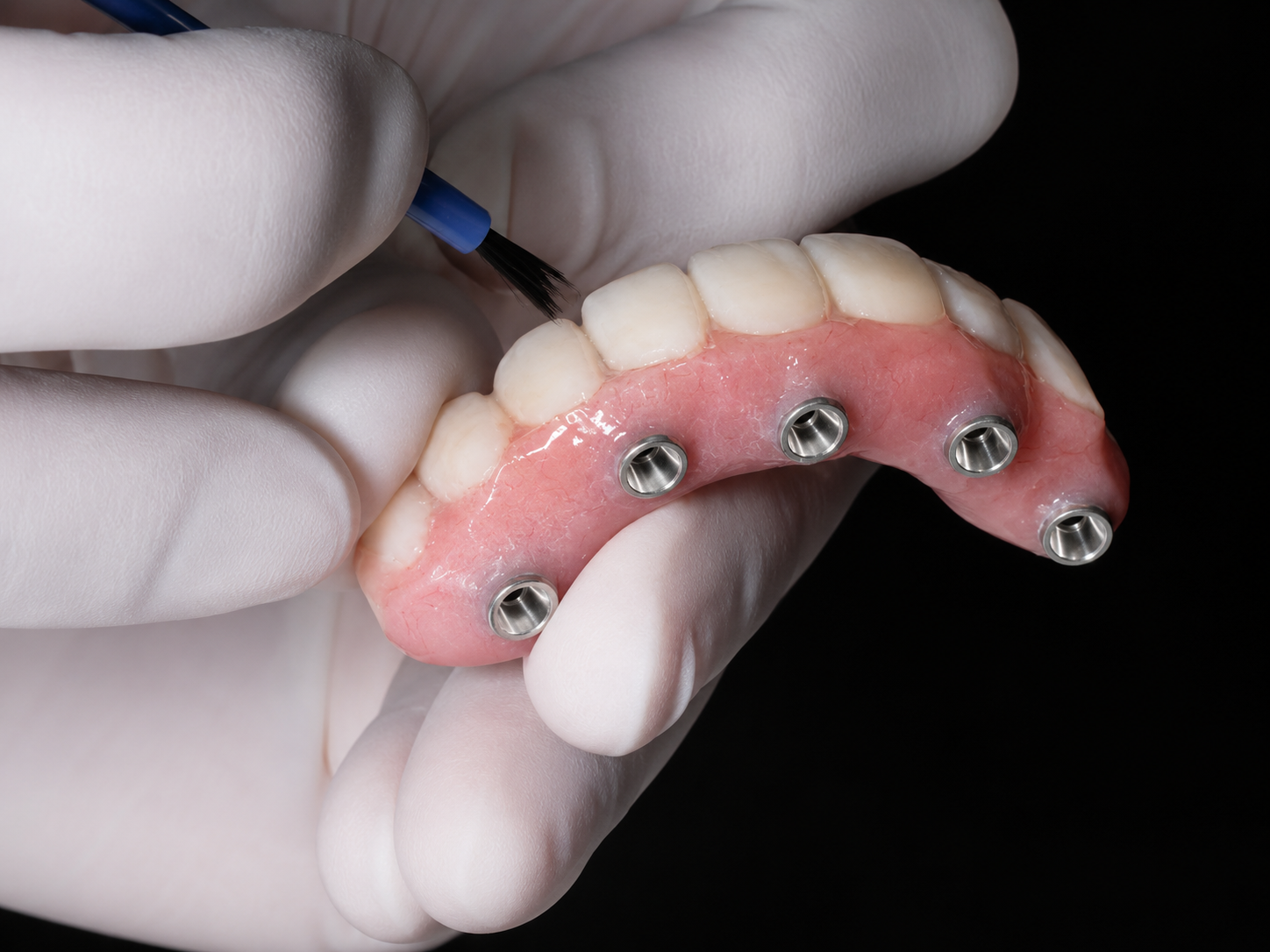
Do You Need More Bone Before Dental Implants?
Dental implants need enough healthy jawbone for support. If bone has reduced after tooth loss, gum disease, infection, trauma or long-term denture wear, implant placement may need extra planning.
A dental bone graft can help improve bone height, width or volume, making implant treatment more predictable in suitable cases.
- Free consultation available worth £50*
- Free CBCT 3D scan worth £169*
- 0% finance available
- Ridge augmentation and GBR options
- Sinus augmentation where suitable
Save £219 — Book Your Implant Consultation
Our implant team will assess your jawbone, gum health, missing teeth and implant goals before explaining whether a dental bone graft is needed.
Our Implant Patient Video Testimonials
Hear from patients who have experienced implant treatment and learn more about the care provided by Woodbridge Hill Dental Practice.
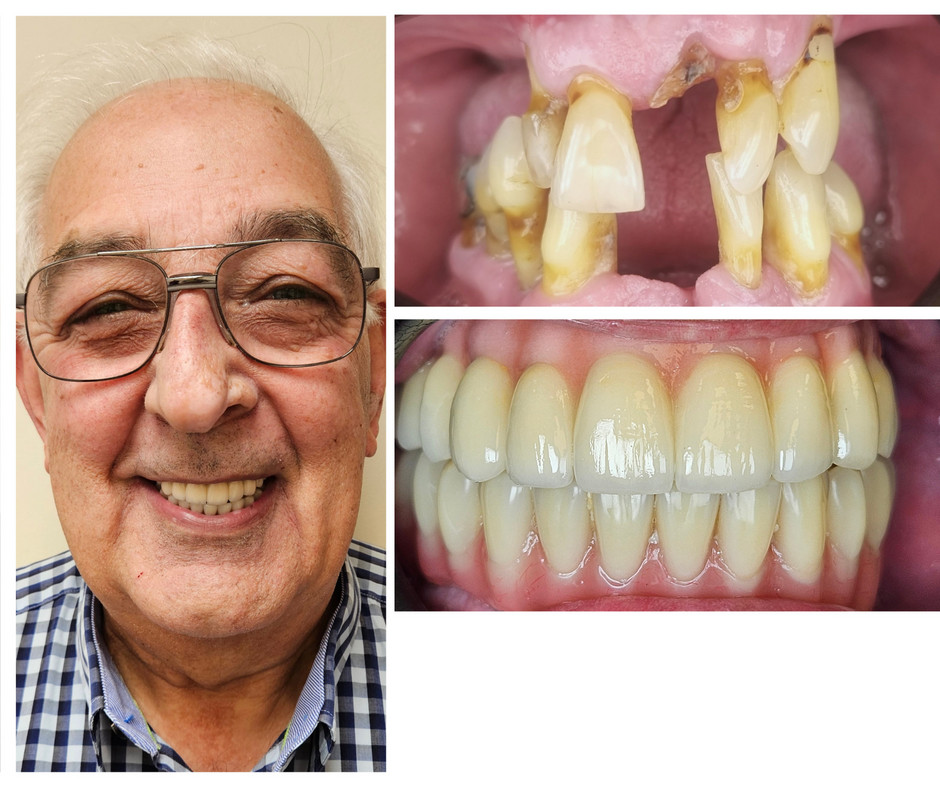
What Is a Dental Bone Graft?
A dental bone graft is a procedure used to rebuild or add bone where the jawbone has become too thin, too low or too weak to support a dental implant safely.
Bone grafting material is placed in the area that needs support. Over time, the graft acts as a scaffold, helping your body form new bone around it.
Dental Bone Grafts in Guildford may be recommended after tooth loss, before implant placement, during socket preservation, as part of ridge augmentation, or alongside sinus augmentation.
Dental Bone Graft Treatment Explained
Bone grafting helps create a stronger foundation for dental implants. Your dentist will explain the graft type, healing time and implant plan during your consultation.
Watch these videos to see how advanced bone grafting and implant planning can help patients with reduced bone move forward with treatment.
- Improves bone support for implants
- Useful after tooth loss or infection
- Planned with CBCT 3D imaging
- Can be part of ridge augmentation or GBR
- Designed for long-term implant stability
Educational Videos
Learn About Dental Bone Grafts
Watch these videos to learn more about bone grafting, sinus augmentation and implant treatment planning.
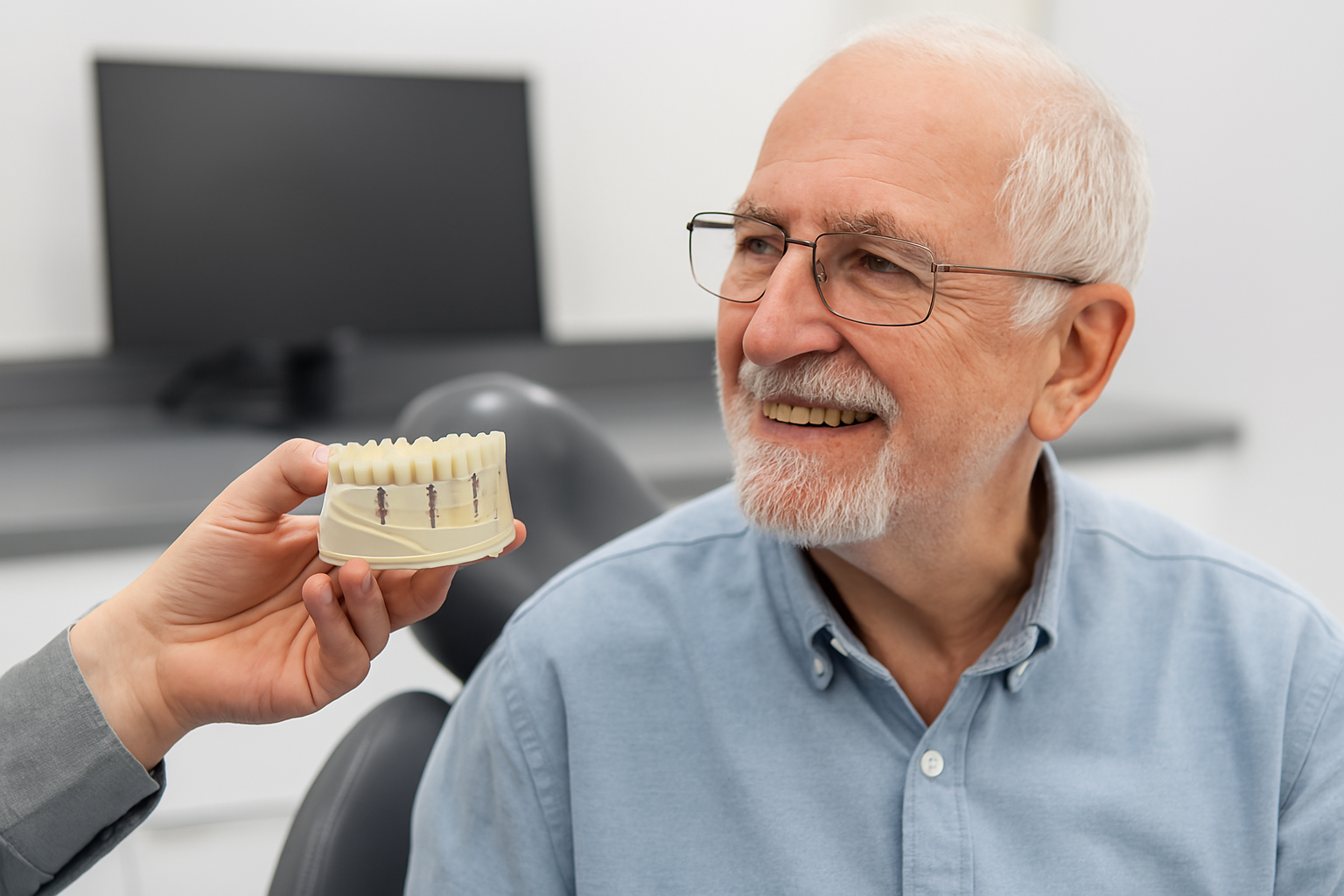
Do I Need a Bone Graft Before a Dental Implant?
You may need a bone graft before a dental implant if there is not enough bone height, width or density to hold the implant securely.
This can happen when a tooth has been missing for a long time, after gum disease, following infection, after trauma, or when the sinus is close to the upper jaw. A CBCT 3D scan helps us check your bone volume and decide whether a graft is needed before implant placement.
- Missing tooth for a long time
- Reduced jawbone height or width
- Previous infection or gum disease
- Upper back jaw near the sinus
- Planning for long-term implant stability
Types of Dental Bone Grafts in Guildford
Different types of Dental Bone Grafts in Guildford may be used depending on the amount of bone needed, the implant plan and your individual oral health.
Autogenous Bone Graft
An autogenous bone graft uses your own bone, usually from another area of the mouth. It may be recommended for selected cases where strong natural grafting support is needed.
Xenograft Dental Bone Graft
A xenograft dental bone graft uses carefully processed bone material from an animal source. It is commonly used to support new bone formation in implant dentistry.
Allograft Bone Graft
An allograft bone graft uses processed donor bone material. It can provide a scaffold for your own bone to grow into during healing.
Ridge Augmentation, Guided Bone Regeneration and Sinus Augmentation
Some implant cases need more advanced bone rebuilding. Your dentist will recommend the most suitable technique after your clinical examination and CBCT scan.
Ridge Augmentation
Ridge augmentation is used when the jaw ridge has become too narrow or reduced after tooth loss. It helps rebuild the shape of the ridge to support future implants.
Guided Bone Regeneration (GBR)
Guided bone regeneration uses graft material and, in some cases, a protective membrane to guide new bone growth and stop soft tissue from entering the grafted area.
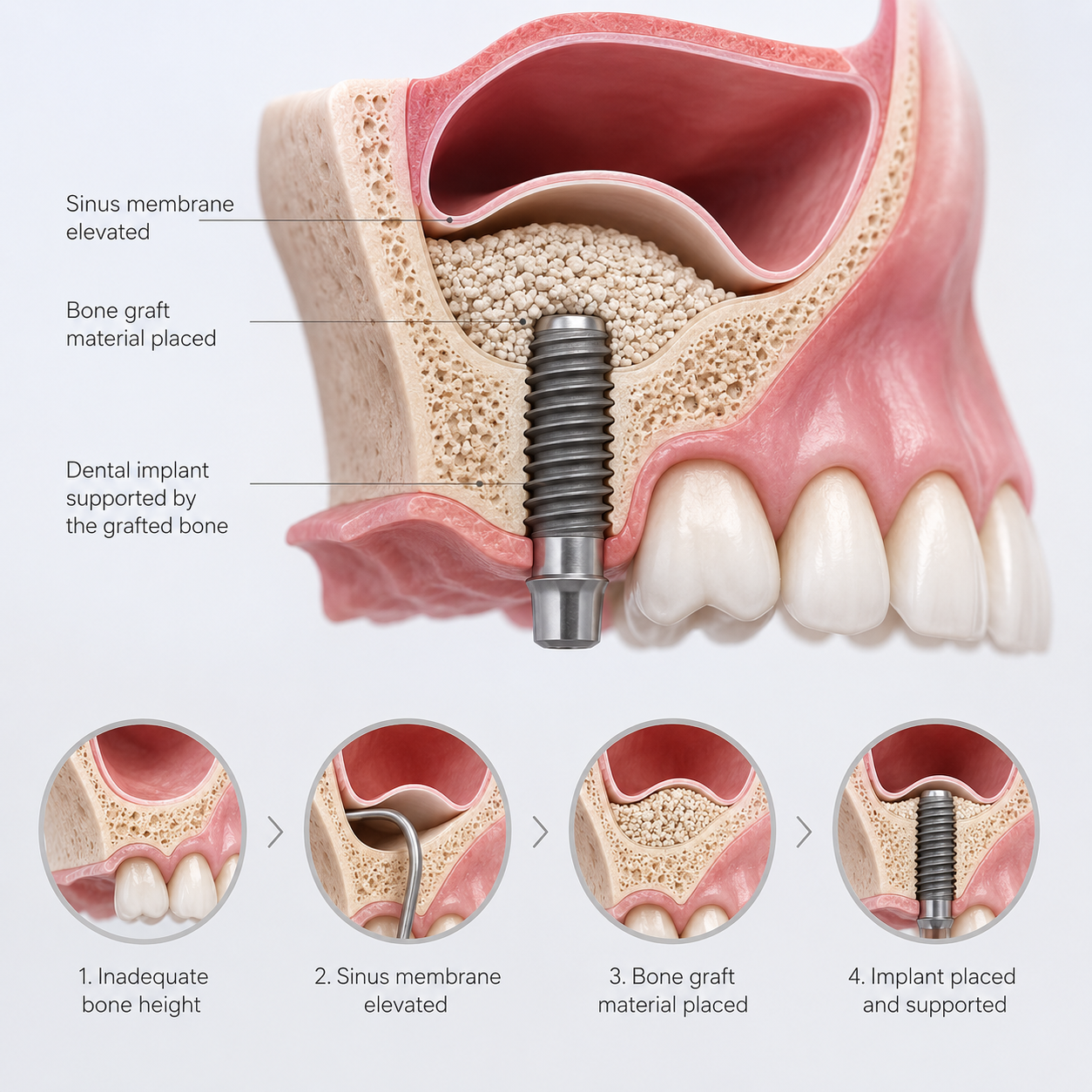
Sinus Augmentation
Sinus augmentation is used in the upper back jaw when the sinus is close to the implant site. It helps create more bone height for dental implant placement.
Is a Dental Bone Graft Painful?
Dental bone graft treatment is carried out with local anaesthetic, so the area is numb during the procedure. Most patients feel pressure or movement rather than pain.
After treatment, mild soreness, swelling or bruising can occur. This is usually managed with the aftercare advice and medication recommended by your dentist.
How Long Does Healing Take?
Healing time varies depending on the size of the graft and your treatment plan. Many grafts need several months before implant placement can be considered.
Dental Bone Graft Recovery
Recovery usually includes rest, soft foods, careful cleaning and avoiding smoking. Your dentist will give you specific aftercare instructions.
Dental Bone Graft Healing Stages
Healing normally starts with soft tissue recovery, followed by gradual bone integration and strengthening. A scan may be used later to assess readiness for implants.
Advanced Imaging
Advanced 3D CBCT Imaging for Implant Planning
Careful planning is essential for successful bone graft and implant treatment.
At our implant clinic in Guildford, we use advanced CBCT 3D imaging to assess your jawbone, sinus, teeth, gums, nerves and surrounding structures in detail — helping us plan treatment with greater accuracy.
01483 568584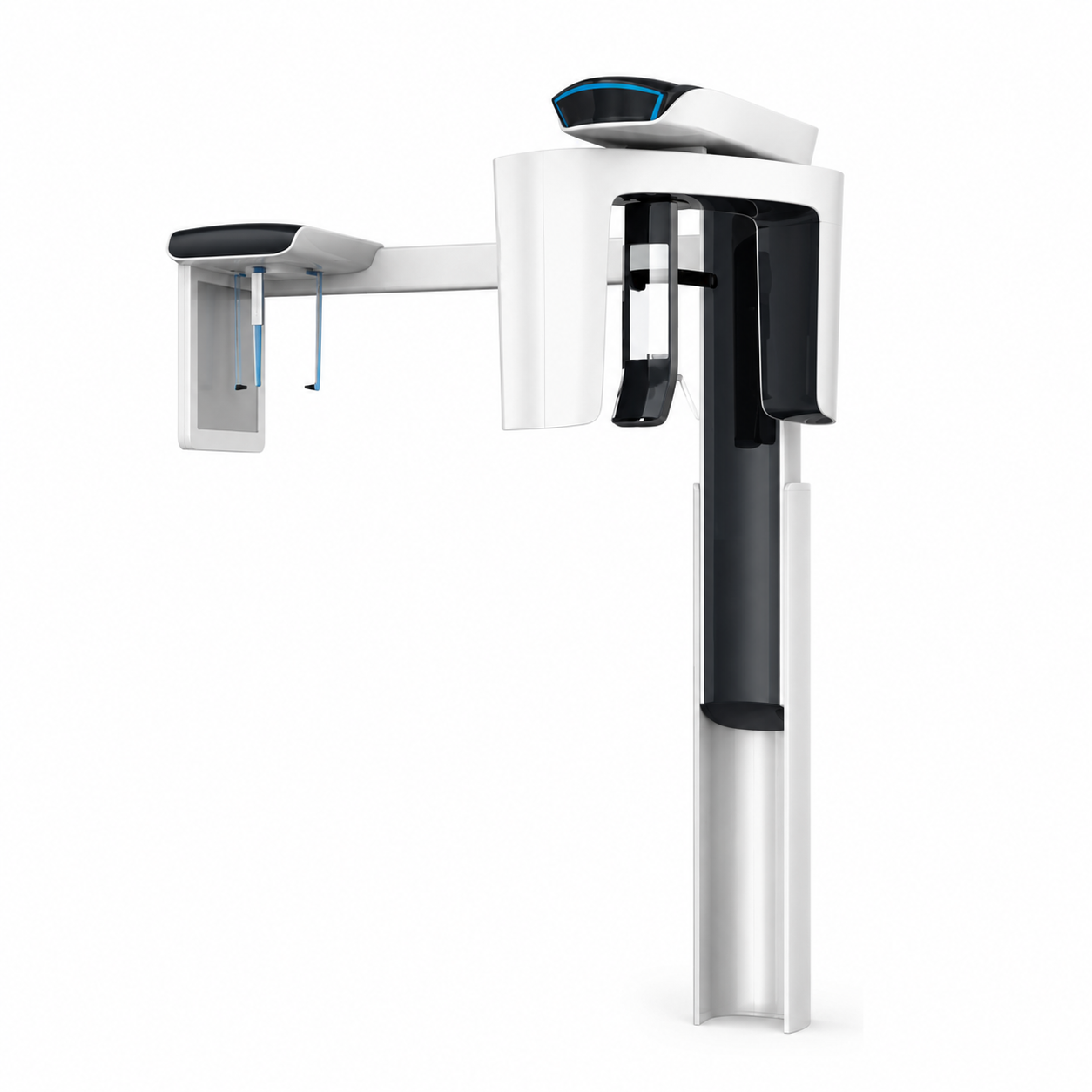
The Dental Bone Graft Process
Your treatment starts with a detailed consultation and 3D assessment. We will explain whether ridge augmentation, guided bone regeneration, sinus augmentation or another grafting option may be suitable.
Consultation
We assess your missing teeth, jawbone, gums and implant goals.
CBCT Scan
A 3D scan helps us assess bone height, width, density and anatomy.
Graft Planning
We recommend the most suitable graft type and explain the healing timeline.
Implant Planning
Your implant treatment is planned around the healed graft and long-term result.
Why Choose Woodbridge Hill Dental Practice?
Woodbridge Hill Dental Practice is a trusted dental clinic in Guildford, Surrey, providing implant, cosmetic, restorative and general dental care.
Advanced Implant Care
Our team provides careful planning for bone grafts, ridge augmentation, GBR and complex implant cases.
Modern 3D Imaging
CBCT scanning helps us assess bone volume, sinus position and implant suitability in detail.
More Treatment Options
We can discuss autogenous grafts, xenografts, allografts, ridge augmentation and sinus augmentation where suitable.
Frequently Asked Questions About Dental Bone Grafts in Guildford
What is a dental bone graft?+
A dental bone graft is a procedure used to rebuild or increase jawbone volume before dental implant treatment.
Is a dental bone graft painful?+
The procedure is carried out with local anaesthetic. Most patients feel pressure rather than pain during treatment.
How long does a dental bone graft take to heal?+
Healing time varies, but many grafts need several months before implant placement can be considered.
Do I need a bone graft before a dental implant?+
You may need a graft if there is not enough bone height, width or density to support an implant safely.
What is guided bone regeneration?+
Guided bone regeneration uses graft material and sometimes a membrane to support new bone growth around the implant site.