
Bone Preservation After Tooth Extraction
Socket & Ridge Preservation in Guildford
Protect your bone and gum shape after tooth extraction. Socket and ridge preservation helps maintain the natural jawbone structure and can create a stronger foundation for future dental implants.

Preserve the Bone Before It Shrinks
When a tooth is removed, the surrounding bone is no longer stimulated by the tooth root. Over time, this can lead to bone shrinkage, gum collapse and more complex implant treatment later.
Socket preservation, also known as ridge preservation, is carried out at the time of extraction to help maintain bone volume and gum shape for future dental implant treatment.
- Free consultation available worth £50*
- Free CBCT 3D scan worth £169*
- 0% finance available
- Helps preserve bone after extraction
- Supports future dental implant planning
Save £219 — Book Your Implant Consultation
Our implant team will assess your tooth, bone level, gum condition and future replacement options before explaining whether socket preservation is suitable for you.
Our Implant Patient Video Testimonials
Hear from patients who have experienced implant treatment and learn more about the care provided by Woodbridge Hill Dental Practice.
What Is Socket & Ridge Preservation?
Socket and ridge preservation is a bone grafting procedure carried out immediately after tooth extraction. It helps maintain the shape and density of the empty socket where the tooth root used to be.
After a tooth is removed, the surrounding bone can begin to shrink. This can make future dental implants more difficult and may affect the appearance of the gum line.
By placing bone graft material into the socket at the time of extraction, we can help protect the ridge and create a better foundation for future implant placement.
Socket Preservation Treatment Explained
Socket preservation is used to reduce bone loss after extraction and support future dental implant planning. It is often recommended when you are likely to replace the missing tooth with an implant later.
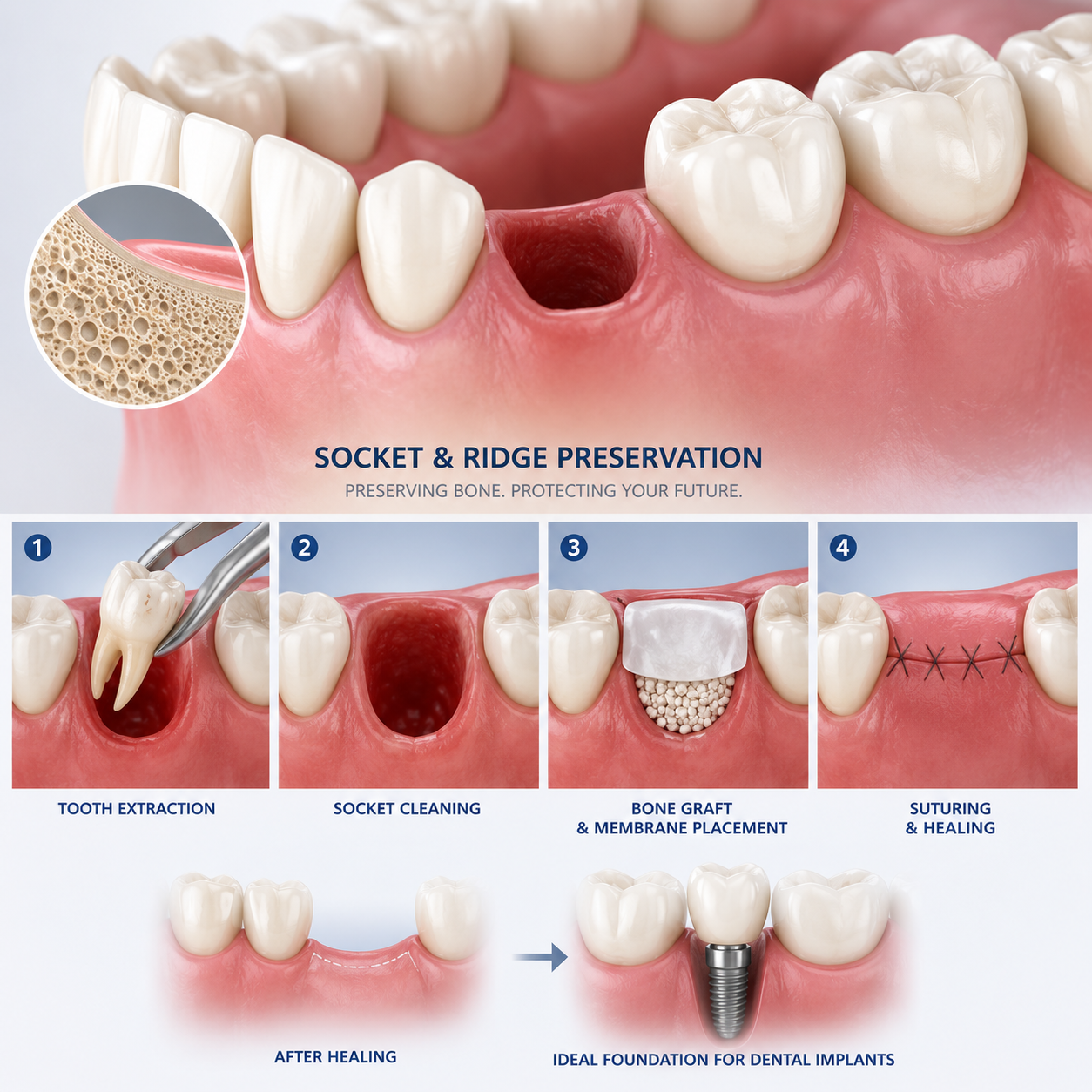
The illustration shows how ridge preservation can protect bone and gum shape after tooth removal.
- Helps maintain bone volume
- Protects the natural gum contour
- Supports future implant placement
- May reduce the need for larger grafts later
- Performed at the time of extraction where suitable
Why Is Socket Preservation Needed?
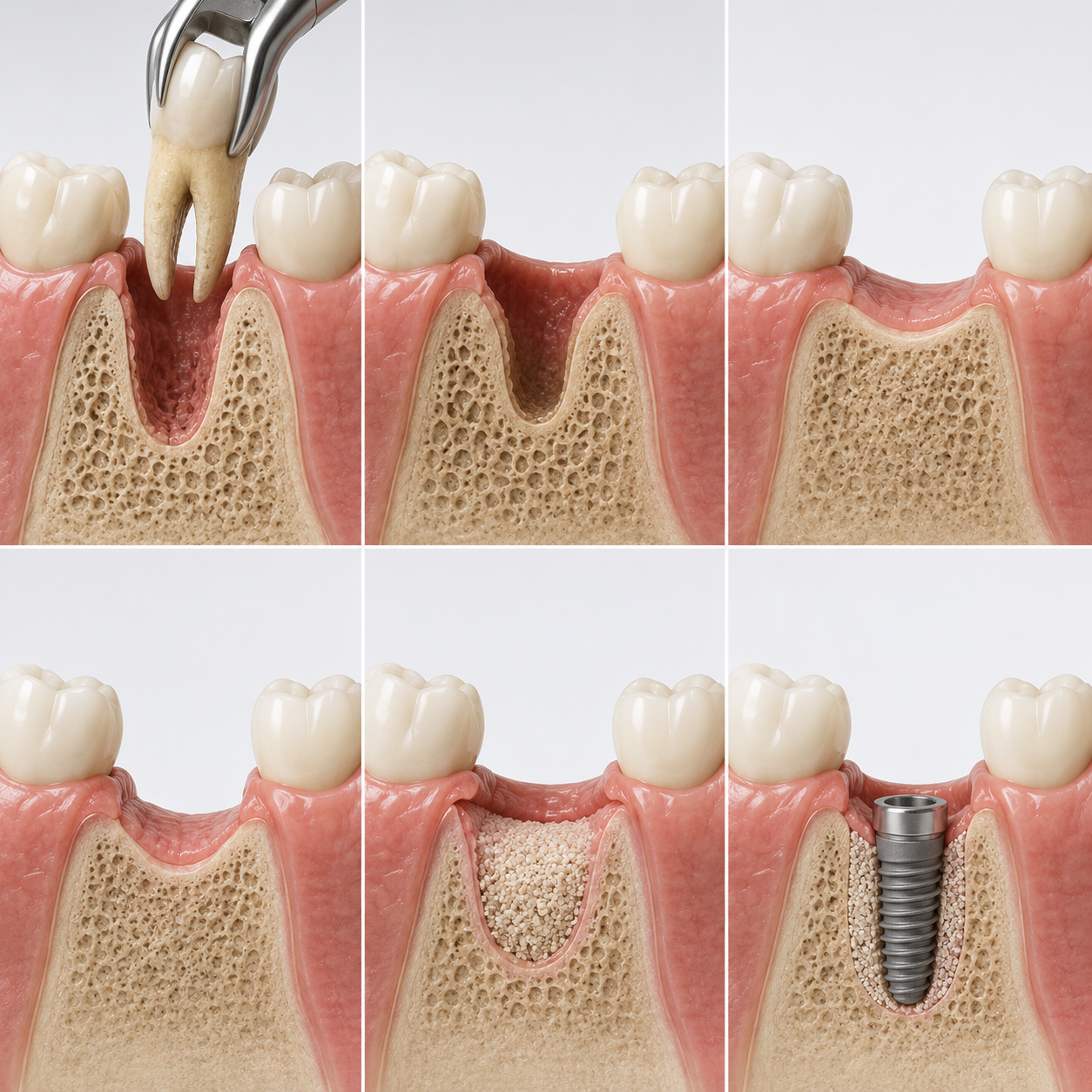
Once a tooth is extracted, the bone that supported the tooth can shrink because it is no longer being stimulated by the tooth root. This can happen quickly during the first few months after extraction. Socket preservation helps maintain the natural ridge shape, which can make future implant treatment more predictable and less complex.
Maintains Bone Structure
The graft material helps support the socket and reduce collapse of the surrounding bone.
Prepares for Dental Implants
Preserving the ridge can help create a better foundation for future implant placement.
Protects Gum Shape
Good ridge preservation can support a more natural gum contour around future restorations.
What Happens If Socket Preservation Is Not Performed?
If the extraction socket is left to heal without preservation, the jawbone may shrink in height and width. This can affect the appearance of the gum line and make dental implant placement more challenging later.
In some cases, patients may need a separate, more complex bone grafting procedure before an implant can be placed.
- Loss of bone height and width
- Possible gum collapse
- More complex future implant treatment
- Potential need for additional bone grafting
- Longer treatment time before tooth replacement
Socket Preservation and Immediate Implants
In some cases, socket preservation may be part of a wider implant plan. If an immediate implant is suitable, the tooth may be removed and the implant placed at the same appointment.
In other cases, socket preservation is used first to help rebuild the foundation before implant placement takes place a few months later. Your dentist will explain whether immediate implants, delayed implants or socket preservation first is the best option for your case.
Book Online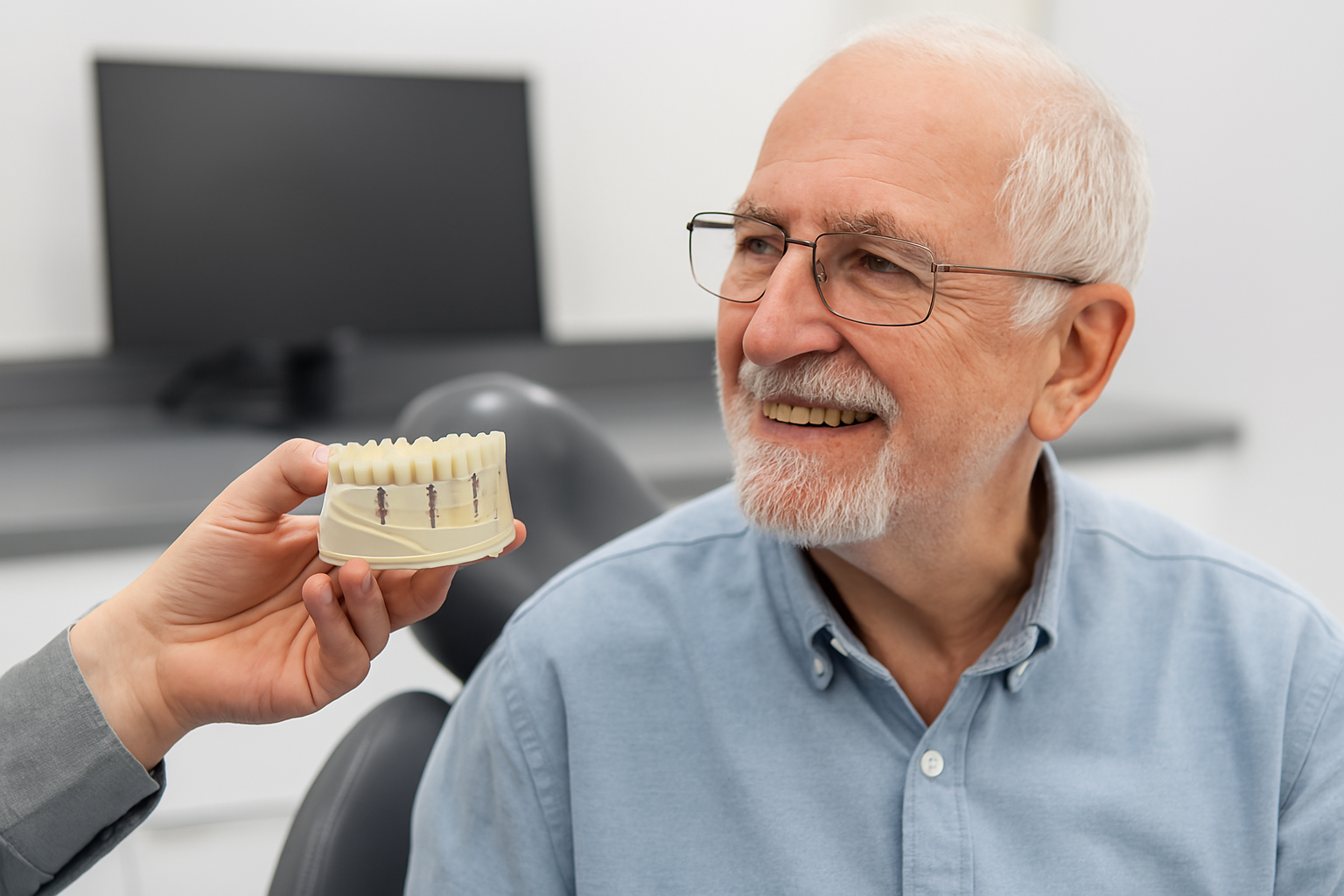
Benefits of Socket & Ridge Preservation
Socket preservation can help protect your oral health after extraction and support future dental implant treatment.
Preserves Bone Volume
Helps maintain the shape and density of the jawbone after tooth removal.
Supports Future Implants
Creates a more stable foundation for dental implant placement.
Reduces Complexity Later
May reduce the need for larger bone grafting procedures in the future.
- Helps protect bone after extraction
- Supports gum and ridge shape
- Useful before future dental implants
- Can improve implant planning options
- Performed at the same time as extraction where suitable
- Helps preserve smile aesthetics
The Socket Preservation Procedure
Socket preservation is usually carried out during the same appointment as tooth extraction. The aim is to clean the socket, place graft material and protect the healing area.
Gentle Extraction
The tooth is carefully removed while aiming to preserve the surrounding bone and gum tissue.
Socket Cleaning
The socket is cleaned to remove debris, infection and unwanted tissue before grafting.
Bone Graft Placement
Graft material is placed into the socket to support future bone regeneration.
Membrane and Healing
A protective membrane and sutures may be used to support healing and protect the graft.
Implant Placement Following Socket Preservation
After socket preservation, the grafted area needs time to heal and form new bone. In many cases, dental implant placement may be considered after a healing period of around 3 to 4 months.
During this time, we monitor healing and plan the most suitable time for implant placement. This can help improve implant stability and long-term treatment predictability.
- Healing usually takes several months
- CBCT scan may be used before implant placement
- Implant timing depends on bone healing
- Final plan is personalised to your mouth
Why Choose Woodbridge Hill Dental Practice?
Woodbridge Hill Dental Practice is a trusted dental clinic in Guildford, Surrey, providing implant, cosmetic, restorative and general dental care.
Experienced Implant Care
Our team carefully plans extraction, socket preservation and implant treatment.
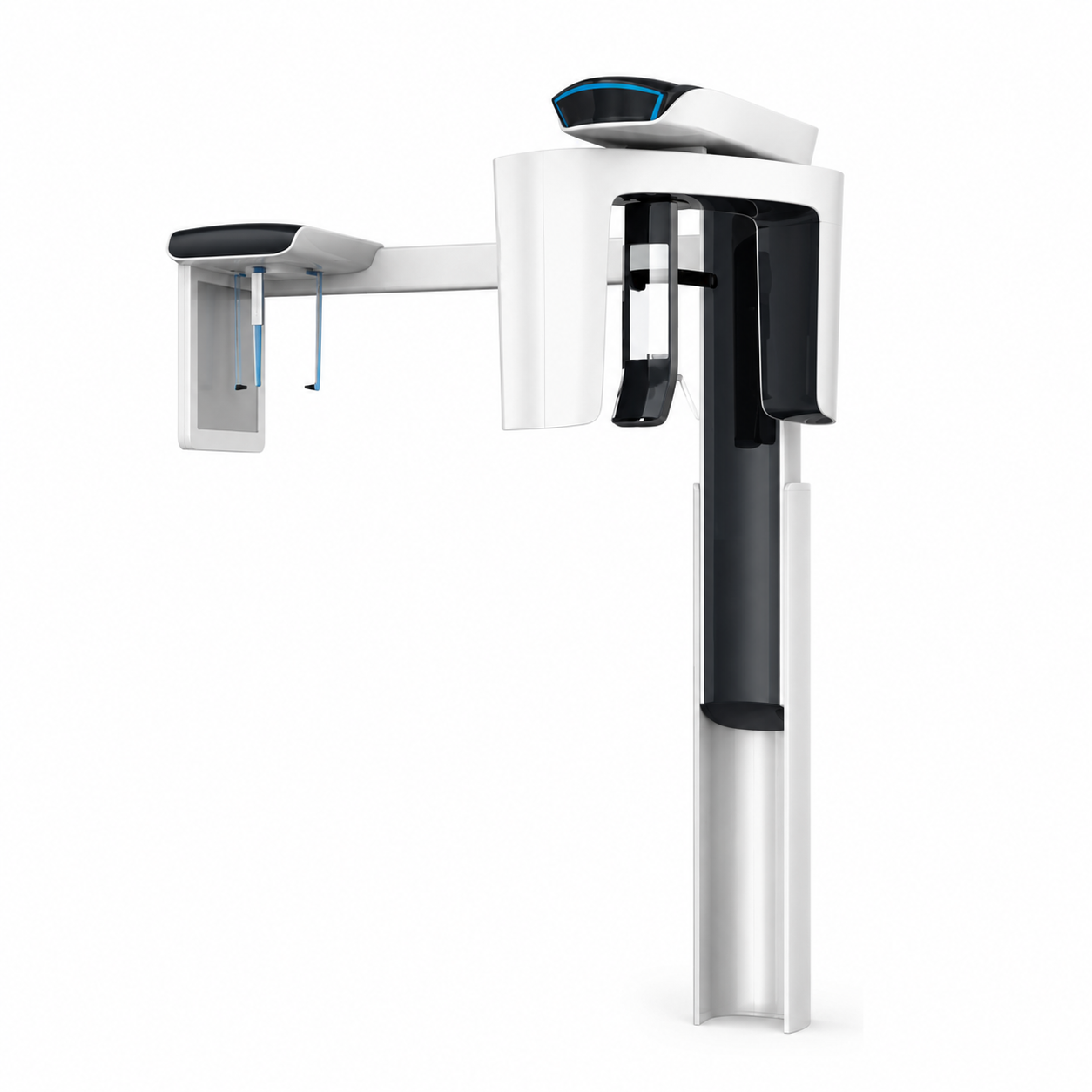
Modern 3D Imaging
CBCT scanning helps us assess bone volume and plan future implant placement.
Future-Focused Planning
We protect the extraction site with future tooth replacement and long-term function in mind.
Frequently Asked Questions About Socket & Ridge Preservation
What is socket preservation?+
Socket preservation is a bone grafting procedure performed after tooth extraction to help maintain the bone and gum shape of the empty socket.
Why is socket preservation needed?+
After extraction, the jawbone can shrink because the tooth root is no longer stimulating it. Socket preservation helps reduce this bone loss.
Is socket preservation needed before dental implants?+
It may be recommended if you are planning a future dental implant and want to protect the bone foundation after extraction.
When can I have an implant after socket preservation?+
Many patients may be ready for implant placement after around 3 to 4 months, depending on healing and bone development.
Can socket preservation be done at the same time as extraction?+
Yes, socket preservation is commonly performed during the same appointment as the tooth extraction where suitable.